
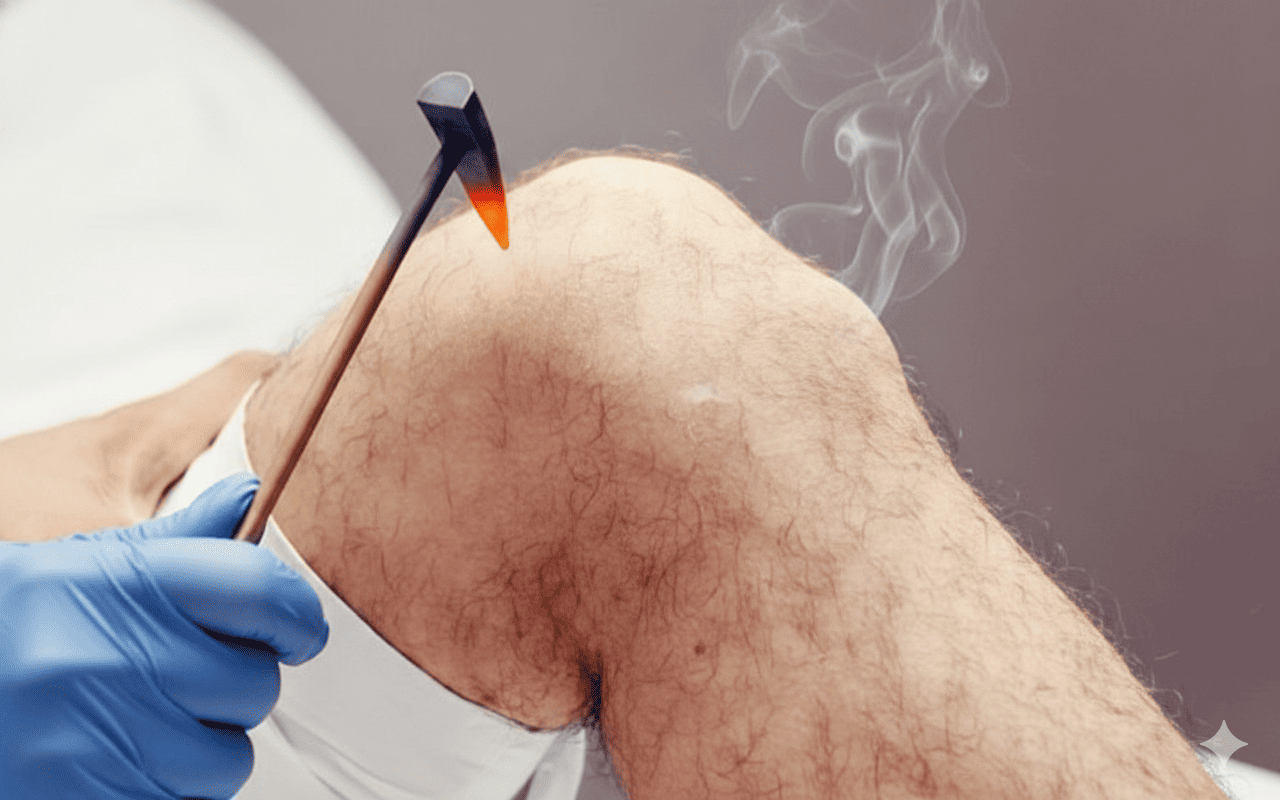
Agnikarma — Ayurvedic Fire Therapy for Chronic Pain
Agnikarma is a classical Ayurvedic para-surgical procedure in which controlled therapeutic heat is applied to specific points of the body to relieve chronic pain from its root. It is particularly beneficial in musculoskeletal disorders dominated by Vata and Kapha dosha imbalances.

Overview
Agnikarma has been described in classical Ayurvedic texts, especially Sushruta Samhita, as one of the most effective procedures for pain management when medicines alone fail. The technique has been practiced for thousands of years in India as a minimally invasive outpatient procedure.
Historical Context:
- First detailed in Sushruta Samhita (considered the father of surgery in Ayurveda).
- Traditionally used for conditions involving chronic pain, stiffness, and non-healing disorders.
Success Rates & Clinical Observations:
- Many Ayurvedic clinical studies report significant reduction in pain scores (VAS scale) within 1–3 sittings.
- Particularly effective in early osteoarthritis, sciatica, frozen shoulder and plantar fasciitis.
- Often reduces dependency on long-term analgesics.
Understanding Doshas:
• Vata represents movement and nerve impulses in the body; its aggravation causes pain and stiffness.
• Kapha represents structure and lubrication; imbalance may cause swelling and heaviness.
Agnikarma helps pacify aggravated Vata and Kapha at the local site.
Classical References
दहनं श्रेष्ठं शस्त्रक्षाराभ्यां ॥
Transliteration: Dahanaṃ śreṣṭhaṃ śastra-kṣārābhyām.
Meaning: Thermal cauterization is superior to surgical and alkaline procedures in certain disorders.
— Sushruta Samhita, Sutrasthana
यत्रौषधक्षारशस्त्राणि न सिद्ध्यन्ति तत्र दहनम् ॥
Transliteration: Yatra auṣadha-kṣāra-śastrāṇi na siddhyanti tatra dahanam.
Meaning: Where medicines, alkali and surgery fail, Agnikarma should be applied.
Indications
- Knee Pain & Early Osteoarthritis
- Sciatica & Lower Back Pain
- Cervical & Lumbar Spondylosis
- Frozen Shoulder
- Tennis Elbow
- Heel Pain (Plantar Fasciitis)
- Corns & Warts
Contraindications & Precautions
- Uncontrolled diabetes
- Severe anemia
- Pregnancy (specific anatomical sites)
- Active infection at the treatment site
- Very young children without proper evaluation
Possible Side Effects & Risks
- Mild temporary burning sensation
- Superficial blister or local discoloration (rare if properly performed)
- Minor scab formation that heals in a few days
- Very rare risk of infection if post-care is not followed
Proper sterile technique and trained supervision significantly minimize risks.
How Agnikarma Works
- Balances aggravated Vata and Kapha locally
- Improves microcirculation
- Stimulates tissue metabolism
- Reduces inflammation
- Interrupts chronic pain signaling pathways
Step-by-Step Procedure
- Consultation & Evaluation: Detailed examination including dosha assessment and modern diagnosis if required.
- Preparation: Cleaning and marking of therapeutic points.
- Application: Heated Shalaka applied briefly to selected points.
- Immediate Care: Cooling herbal paste or ghee application.
- Follow-up: Diet, lifestyle and strengthening advice.
Case Observations & Patient Feedback
- Case 1: 52-year-old patient with knee osteoarthritis reported 60–70% pain reduction after 2 sittings.
- Case 2: 38-year-old patient with chronic plantar fasciitis experienced significant relief within 10 days.
- Patient Feedback: Most patients report improved mobility and reduced stiffness within 48 hours.
Importance of Qualified Supervision
Agnikarma should always be performed by a qualified Ayurvedic practitioner trained in para-surgical procedures. Proper diagnosis, sterile technique, and anatomical precision are essential to ensure safety and effectiveness.
Expected Outcomes
Relief is often noticeable within 24–48 hours. Chronic cases may require 1–3 sittings. Being an OPD-based procedure, it typically lasts 10–20 minutes and allows same-day routine activities with precautions.
After Agnikarma — Quick Care Tips
- Avoid water contact for 24 hours.
- Follow prescribed herbal medications.
- Avoid excessive strain for 1–2 days.
FAQs — Agnikarma
Is Agnikarma painful?
A brief heat sensation is felt for a few seconds. Most patients tolerate it comfortably.
Is it scientifically supported?
Several institutional Ayurvedic studies report pain reduction and improved joint function, though more large-scale randomized trials are still needed.
Will it leave scars?
Minor superficial marks may appear temporarily but usually fade with proper care.
Prepared by ROG NIVARAN HOSPITAL • For educational and clinical use only.
Scientific References
1. Jethava NG et al. Agnikarma in Sandhigata Vata (knee osteoarthritis) — an OPD clinical evaluation showing significant pain relief with Agnikarma. PMC Article; 2015. 0
2. Kumar JV et al. A comparative clinical study of Siravedha vs. Agnikarma in Gridhrasi (sciatica): Agnikarma showed superior symptomatic improvement. PMC Article; 2014. 1
Note: These studies are published clinical evaluations indexed on PubMed/PMC. They support the effectiveness of Agnikarma in specific chronic pain conditions, but larger multi-center randomized trials are still needed for broader generalization.
Home » Panchakarma » Agnikarma
Leave a Reply