
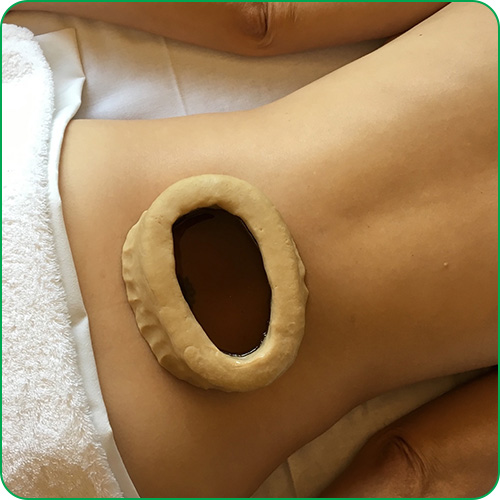
Kati Vasti, Janu Vasti & Greeva Vasti — Targeted Ayurvedic Therapies
These localized Panchakarma therapies use warm medicated oil retained over specific body regions — spine, knees, or neck — to relieve pain, stiffness, and inflammation. They provide deep nourishment to joints and improve flexibility.
Overview
Kati Vasti focuses on the lower back region, Janu Vasti targets the knees, and Greeva Vasti covers the neck area. In each, a reservoir made of black gram dough is placed over the affected region and filled with warm medicated oil (Taila) to penetrate deeply into muscles, joints, and nerves.
Indications
- Chronic back pain, lumbar spondylosis (Kati Vasti)
- Osteoarthritis, knee pain, stiffness (Janu Vasti)
- Cervical spondylosis, neck pain, stiffness (Greeva Vasti)
- Sciatica, slipped disc, and muscular spasms
- Joint inflammation and Vata disorders
Benefits
- Lubricates and nourishes joints and vertebral column
- Relieves stiffness, pain, and inflammation
- Improves blood circulation and flexibility
- Strengthens muscles, tendons, and ligaments
- Helps in disc problems and degenerative conditions
Step-by-Step Procedure
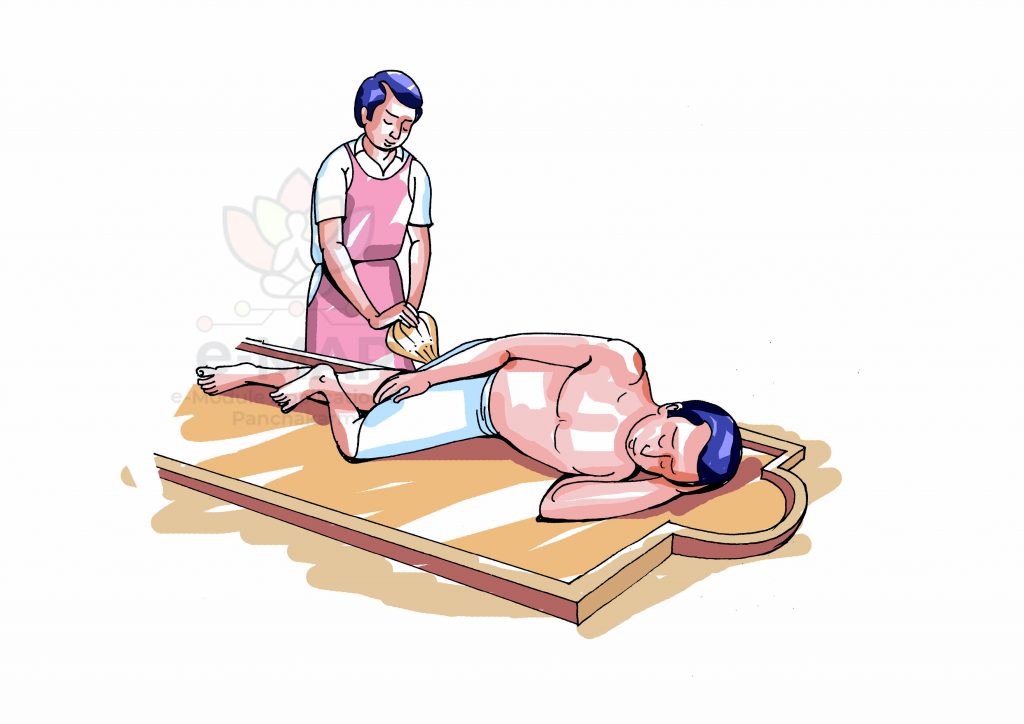
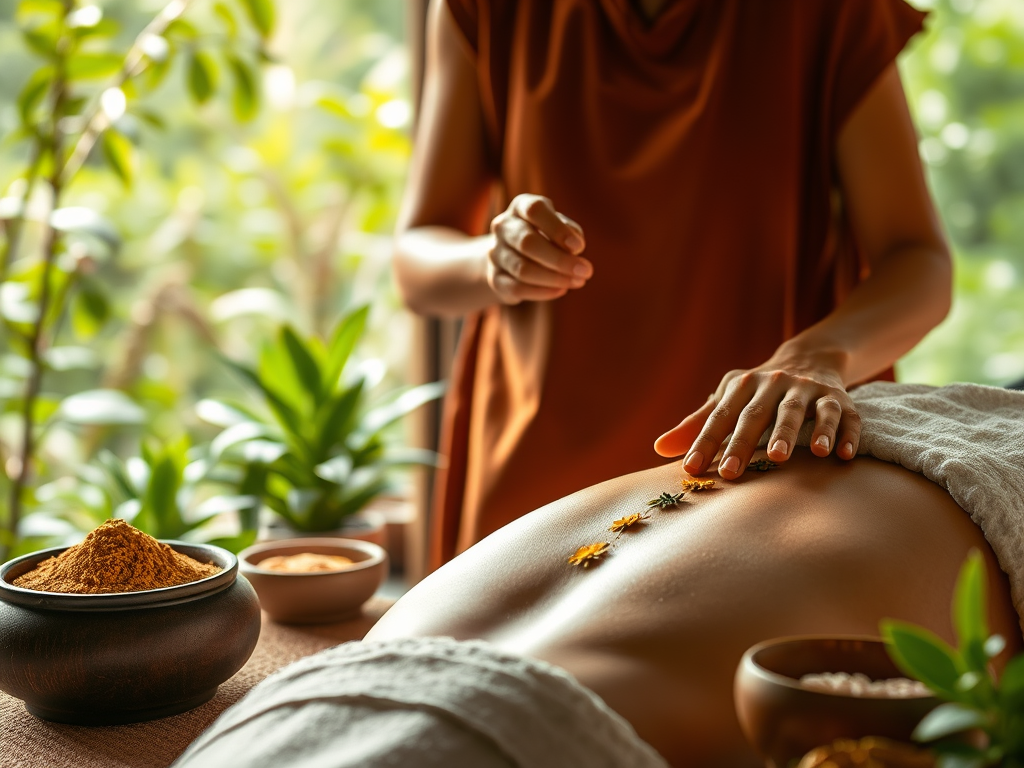
- Preparation: The area (back, knee, or neck) is cleaned and gently massaged with warm oil.
- Dough Ring: A ring of black gram dough is placed around the target area to create a leak-proof boundary.
- Oil Retention: Warm medicated oil (like Mahanarayana Taila, Kottamchukkadi Taila, or Dhanwantaram Taila) is poured inside and kept for 30–40 minutes.
- Post-Procedure: The oil is removed, followed by mild massage and fomentation (Nadi Sweda).
Commonly Used Oils
- Mahanarayana Taila – for stiffness, nerve pain, and muscle spasm
- Kottamchukkadi Taila – for joint pain and inflammation
- Dhanwantaram Taila – for strengthening nerves and bones
- Sahacharadi Taila – for sciatica and lower limb disorders
Precautions
Course Duration
Usually recommended for 7 to 14 days depending on the severity of pain and condition.
Expected Outcomes
Reduces pain, stiffness, and inflammation while restoring strength and flexibility. Improves joint mobility and provides long-term relief from chronic musculoskeletal disorders.
After Procedure Care Tips
- Rest for a few hours after the procedure; avoid strenuous activities.
- Keep the treated area warm and protected from cold exposure.
- Take light, easily digestible food after therapy.
- Avoid cold water bath, direct fan or AC on the treated area.
- Follow the doctor’s advice for internal medicines or exercises if prescribed.
FAQs — Kati, Janu & Greeva Vasti
Is the same oil used for all three therapies?
The oil is selected based on the condition — anti-inflammatory oils for pain, nourishing oils for weakness, and nerve tonics for stiffness.
Can these therapies be done daily?
Yes, usually done daily or on alternate days for 7–14 sessions under Ayurvedic supervision.
Do they provide permanent relief?
Regular sessions combined with internal medication, yoga, and posture correction can provide long-term relief.
Are there any side effects?
When performed properly, there are no side effects. Mild soreness may occur if done with excessive heat or pressure.
Prepared by Rog Nivaaran Hospital • For educational and clinical use only.


Leave a comment